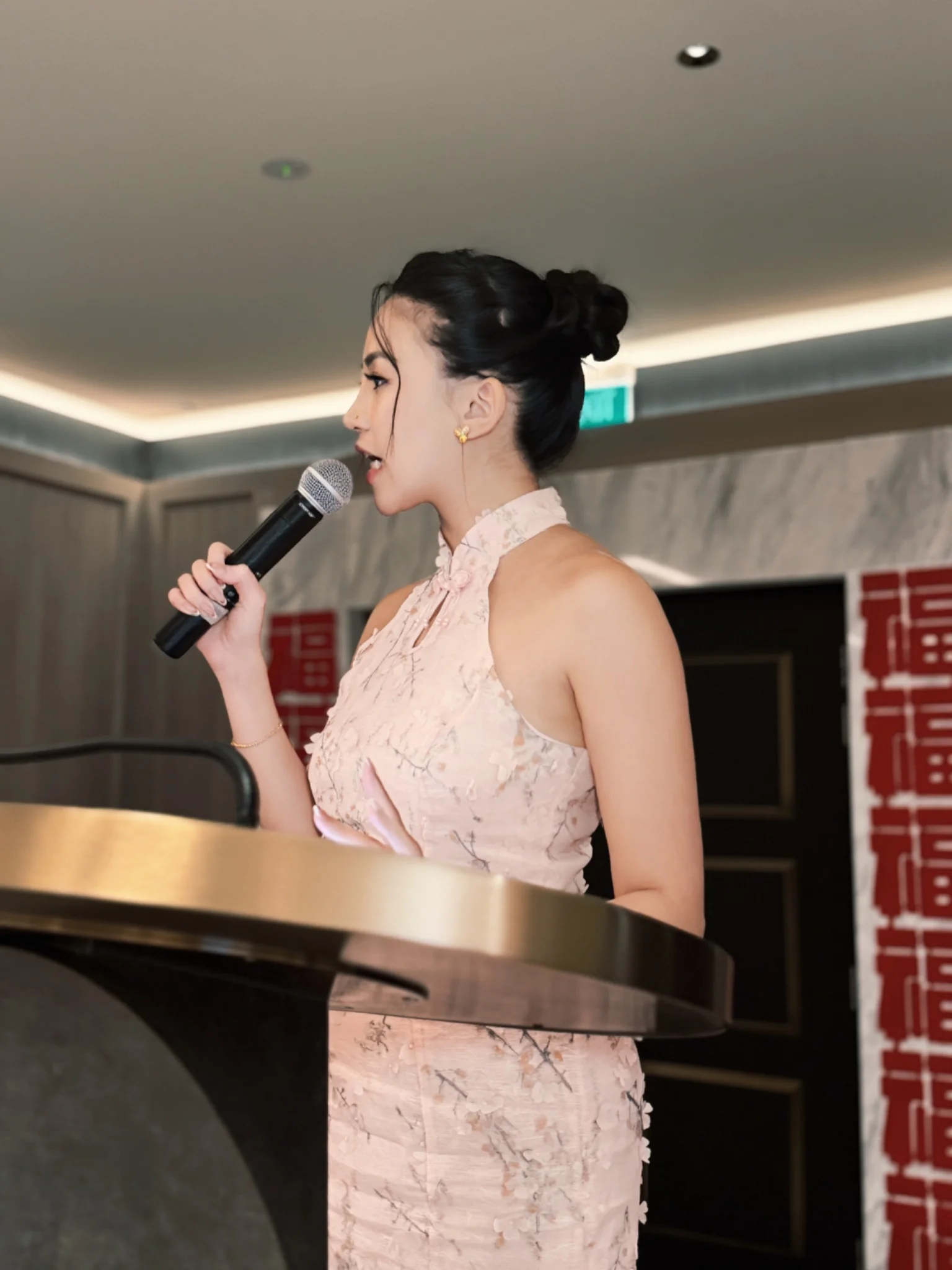
Professional hosting built around the event—not a template.
Fiona hosts in English and Mandarin for Singapore and regional audiences. Her approach is to understand which parts truly need both languages, where concise bridging works better than full repetition, and how the tone should change between formal, celebratory and conversational segments.
Transitions can move between English and Mandarin without sounding like line-by-line translation.
Key information can reach mixed-language audiences while protecting the pace of the programme.
Speaker names, brand terms, titles and technical language are reviewed before the event.
Useful for Singapore programmes with guests, speakers or stakeholders from across Greater China and Southeast Asia.
Relevant experience
Rather than asking clients to take a generic sales claim on trust, Fiona’s site connects the service to real stages from her portfolio.
What to share when enquiring
The fastest way to get a useful response is to include the event date, venue or city, approximate programme timing, audience profile, preferred language format and a draft run sheet if one already exists.
Frequently Asked Questions
Does every segment need to be said twice?
Usually not. The right structure depends on the audience and objective. Some segments may need full bilingual delivery, while others can use concise summaries or language-specific sections.
Can the script mix English and Mandarin?
Yes. The run sheet can mark language changes clearly so the programme feels deliberate rather than improvised.
Is bilingual hosting useful for corporate events?
It can be particularly useful when senior stakeholders, clients or guests have different language preferences, or when the event is designed for a regional audience.
Can Fiona host entirely in Mandarin?
Mandarin requirements vary by event and subject matter. Share the brief and terminology in advance so the appropriate format can be confirmed.