Medical and healthcare conferences occupy a category of their own in professional emceeing. The audience is highly specialised, the subject matter is precise, and the register required is one of quiet authority — informed, clear, and culturally attuned to a room of practitioners from across the region.
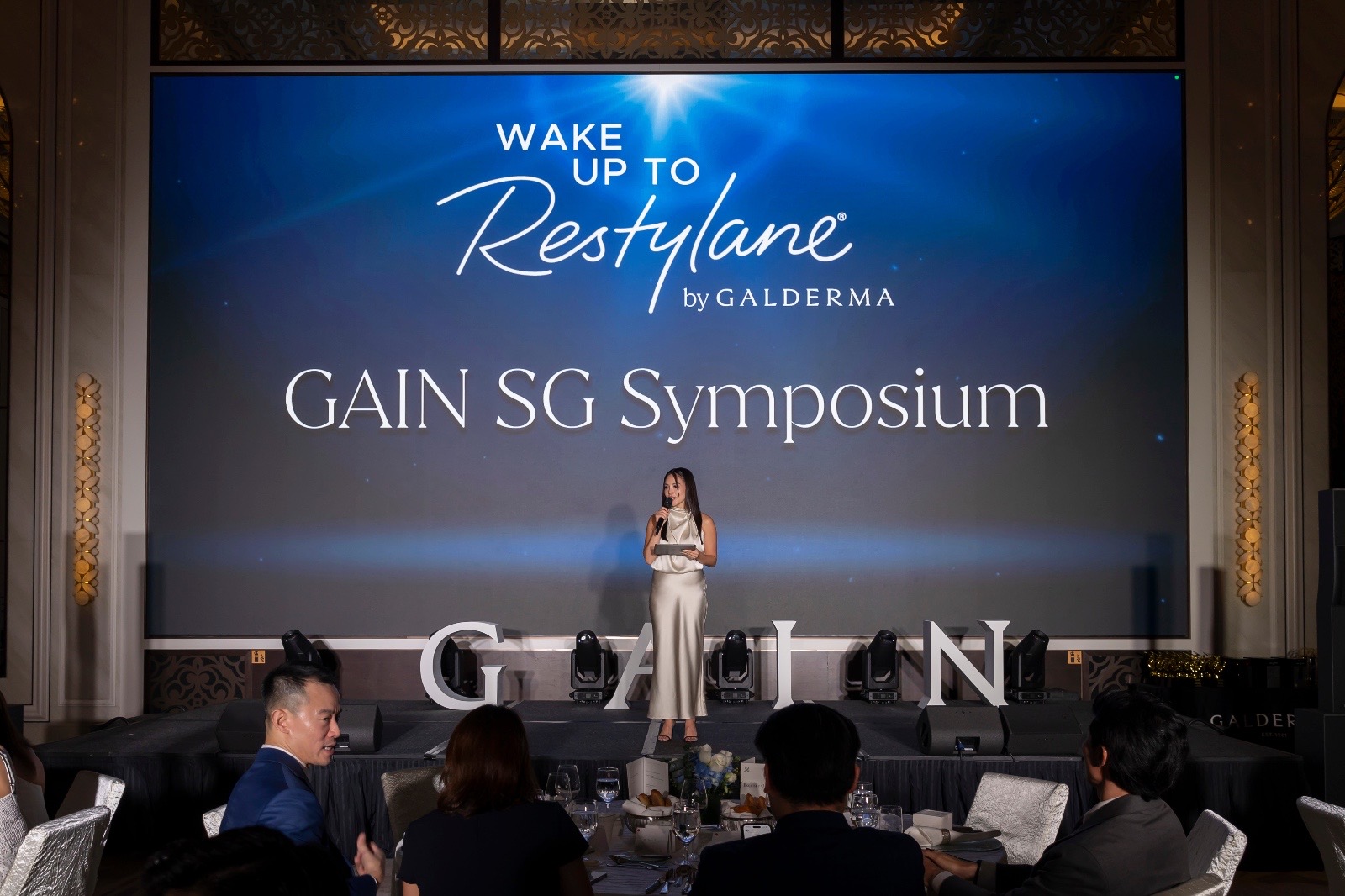
The Galderma GAIN SG Symposium brought together aesthetic medicine doctors, dermatologists, and practitioners from Singapore and across Asia to explore the latest in Restylane and Galderma's broader range of aesthetic solutions. Galderma is one of the world's leading pharmaceutical companies focused entirely on dermatology — the GAIN symposium is a significant regional gathering in that space.
Hosting a medical symposium requires a very different preparation from a brand launch or awards gala. The terminology is specific. The speakers are experts in their field. The agenda moves through clinical presentations, panel discussions, and hands-on demonstrations — each with a distinct pace and tone. The emcee needs to hold all of that together while remaining the clearest, calmest presence in the room.
What medical conference emceeing actually demands
The first requirement is preparation that goes well beyond the script. Before a medical conference, I study the agenda in depth — understanding what each speaker is presenting, why it matters in the context of the broader programme, and how to introduce them in a way that adds context without overstepping into their expertise.
The Galderma GAIN Symposium was held in an elegant setting — a formal banquet room with professional lighting and a full production setup. The atmosphere was one of refinement and intellectual seriousness, fitting for a gathering of medical professionals engaging with clinical content. Matching that atmosphere as the bilingual emcee meant holding an authoritative, composed presence across a full day programme.
The bilingual dimension was especially important here. Aesthetic medicine in Asia is heavily influenced by both Western clinical science and Chinese medical culture. Many of the practitioners attending came from China, Taiwan, and across Southeast Asia, for whom Mandarin was their primary professional language. Delivering programme transitions, speaker introductions, and key moments in both English and Mandarin — with clinical precision in both — is what differentiated the experience for those delegates.
Why specialist events need specialist emcees
One of the most common mistakes event planners make with medical and professional conferences is choosing a generalist emcee and expecting them to hold the room. Practitioners in specialised fields can immediately sense when the person on stage does not understand their world. The wrong emcee creates a subtle but real distance between the programme and the audience.
The right bilingual emcee for a medical conference in Singapore brings genuine preparation, language precision, and the ability to adapt in real time when the programme shifts — which it always does. If you are planning a medical symposium, pharmaceutical conference, or specialist professional event in Singapore, I would welcome a conversation about how to make it exceptional.